Home Recording for Beginners: The Complete Guide to Getting Started for Free
Let's cut straight to what you actually want to know
If you've searched for something like "home recording beginner guide," chances are you want one thing: a clear answer on what to buy, how to set it up, and how to keep costs low. This guide covers exactly that — ① the minimum gear you need, ② how to choose a free DAW, and ③ the step-by-step process from hitting record to exporting your final file. By the time you finish reading, you'll be ready to start recording today.
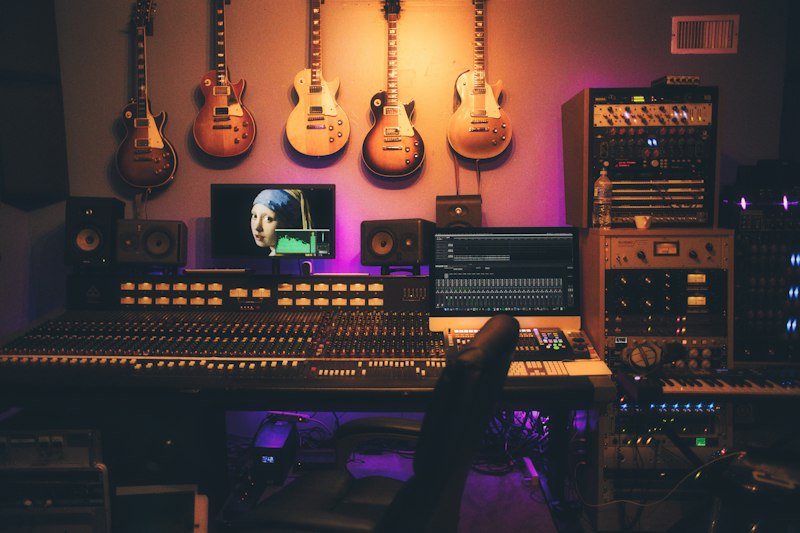
What You Need to Start Home Recording: Bare Minimum vs. Full Setup
Breaking your gear list into "must-haves" and "nice-to-haves" makes the whole thing a lot less intimidating. Here's how it breaks down.
The Essentials (Bare Minimum Setup)
- PC or Mac: Windows 10 or later / macOS 11 or later. Aim for at least a Core i5 or Ryzen 5 processor and 8GB of RAM for comfortable performance.
- Microphone: A USB mic is perfect for beginners. Popular options include the Blue Yeti (around $130) and the Audio-Technica AT2020USB+ (around $150). If you want to use an XLR mic, you'll also need an audio interface.
- DAW software: This is the app you use to record, edit, and mix. Free options are surprisingly powerful — more on those below.
- Headphones: Go for a pair of studio monitor headphones if you can. The Sony MDR-7506 (around $100) and Audio-Technica ATH-M30x (around $70) are reliable, affordable picks.
Gear That Will Noticeably Improve Your Sound
- Audio interface: Connects XLR mics and instruments to your computer. The Focusrite Scarlett Solo (around $120) and SSL 2 (around $200) are beginner favorites.
- Pop filter: The circular screen you place in front of your mic to tame harsh plosives ("p" and "b" sounds). They typically run $10–$20.
- Acoustic treatment: Foam panels (starting around $5–$10 each) help a lot, but even hanging a heavy blanket or recording in a closet full of clothes can significantly reduce unwanted room reflections.
- Studio monitor speakers: Options like the Yamaha HS5 (around $400) or KRK Rokit 5 (around $200) are great down the line, but headphones alone are perfectly fine when you're starting out.
Can I just use my phone?
Yes — a smartphone can handle basic recording using a dedicated app. That said, the audio quality and editing capabilities don't come close to what you get on a computer. If you're serious about home recording, a PC or Mac is the way to go.
Best Free DAWs for Beginners: Top 3 Picks
A DAW (Digital Audio Workstation) is the software you use to record, edit, mix, and master your audio. Paid options like Ableton Live (starting around $100) and Logic Pro ($200) are industry staples, but there are free DAWs out there that are genuinely impressive.
① GarageBand (Mac and iPhone only — Free)
If you're on a Mac, this is your first stop. GarageBand has an intuitive interface and handles everything from recording to mixing. It also serves as a natural stepping stone to Logic Pro, making it ideal for Mac users who plan to upgrade later.
② Audacity (Windows / Mac / Linux — Free, Open Source)
One of the most widely used free recording apps in the world. Audacity excels at straightforward waveform editing and is a solid choice for podcasting, voiceovers, and narration. It's not as strong for MIDI-based music production, but for pure audio recording it's hard to beat. Download it free from the Audacity official site.
③ LA Studio (Browser-based — Completely Free, No Install Required)
A next-generation DAW that runs entirely in your browser — no download, no account needed. Open the LA Studio editor and you get multitrack recording, a MIDI piano roll, 20+ effects, AI Auto-Tune, and AI stem separation, all for free. It works on Chromebooks and lower-spec machines too. If you want to start recording right now with zero setup, this is the option for you.
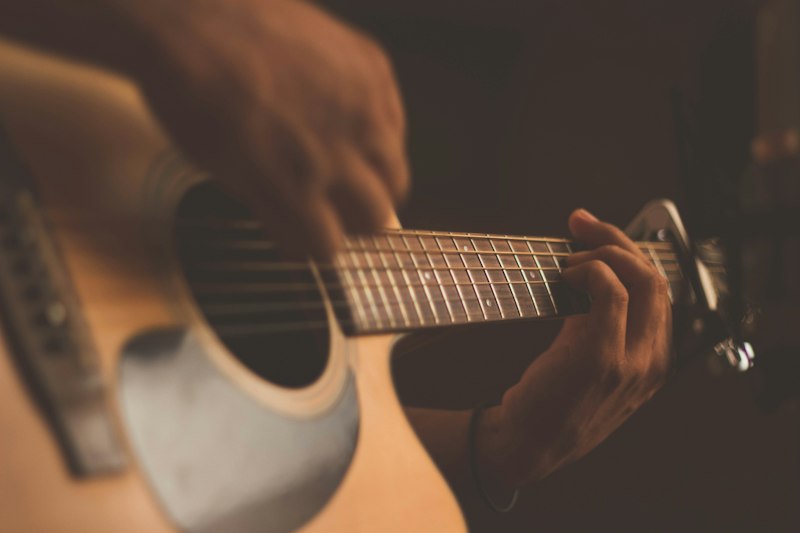
Home Recording Setup Walkthrough: From Plugging In to Pressing Record
The following steps walk you through the quickest possible setup: a USB mic and a free DAW.
Step 1: Connect Your Gear
- Plug your USB mic into an available USB port on your computer (most USB mics are plug-and-play — no driver needed).
- Connect your headphones to your computer's 3.5mm headphone jack, or to the headphone output on the mic itself if it has one.
- Set your USB mic as the input device in your OS sound settings (Windows: Settings → System → Sound → Input / Mac: System Settings → Sound → Input).
Step 2: Configure Your DAW's Audio Settings
- Open your DAW (or just navigate to the URL if you're using a browser-based option).
- In the DAW's preferences or settings, set the sample rate to 44,100 Hz and the buffer size to 256–512 samples. Browser-based DAWs typically handle this automatically.
- Confirm that your USB mic is selected as the input device.
Step 3: Create a Track and Record
- Add a new Audio Track in your DAW.
- Enable the track's record arm button (usually a red circle or the letter "R") to put it in record-ready mode.
- Speak or sing into your mic and watch the input level meter move. Adjust your distance from the mic so the meter stays well below the red zone.
- Hit the Record button (red circle), perform, then press Stop when you're done.
Step 4: Edit and Add Effects
- Trim the recorded waveform to remove any dead air or mistakes at the beginning and end.
- Apply an EQ to cut unnecessary low-end rumble below 100 Hz, and add a compressor to even out your dynamics.
- Add a touch of reverb for a sense of space — go easy on it, less is more.
- If background noise is an issue, run it through a noise reduction tool. The AI Noise Removal tool from LA Studio handles this for free, right in your browser.
Step 5: Mix Down and Export
- Balance the volume levels across all tracks. Make sure nothing is peaking above 0 dBFS.
- Add a limiter to your master track and set the ceiling to around −0.3 dBFS to prevent clipping.
- Export as WAV (44.1 kHz / 16-bit) for the best quality, or MP3 (320 kbps) if file size matters.
5 Tips to Immediately Improve Your Recording Quality
In most cases, a "bad-sounding" home recording isn't about the gear — it's about the recording environment and settings. These five adjustments will make a dramatic difference.
① Tame the Room Reflections
Recording in a bare, hard-floored room creates a boxy, echoey sound. Laying down a rug, closing thick curtains, and positioning yourself in front of a bookshelf full of books all help absorb reflections. Acoustic foam panels are available on Amazon starting at just a few dollars each.
② Keep Your Mic 6–8 Inches From Your Mouth
Too close and you'll get proximity effect — an exaggerated, boomy low end. Too far and you'll pick up the room. Use a mic stand to lock in that 6–8 inch sweet spot and keep it consistent.
③ Control Background Noise
Turn off the AC while recording and position your mic away from your computer's cooling fan. If some noise is unavoidable, AI noise removal during post-processing is a practical fix.
④ Set Your Input Level to −12 to −6 dBFS
If your level meter hits 0 dB (goes red), you've got clipping — a harsh, distorted crackling that can't be fixed in post. Aim to keep your peaks sitting comfortably between −12 and −6 dBFS by adjusting your mic's gain knob.
⑤ Always Monitor With Headphones While Recording
Recording with speakers playing back in the room causes the mic to pick up the speaker output, leading to feedback and bleed. Wear headphones every time you record — no exceptions.
Essential Effects Every Home Recorder Should Know
Used correctly, effects can close the gap between a home recording and a professional one. Start with these four.
EQ (Equalizer)
EQ lets you shape the frequency content of your audio. For vocals, use a high-pass filter to roll off everything below 80–100 Hz (clearing out low-end rumble), and try gently boosting the 2–5 kHz range to add clarity and presence. Check out the Wikipedia article on audio equalization for a deeper dive.
Compressor
A compressor reduces the volume of your loudest moments so everything sits more evenly. This makes vocals sound polished and consistent. A good starting point: Ratio 4:1, Attack 10ms, Release 60ms.
Reverb
Reverb simulates the natural acoustics of a room or hall. The key is subtlety — set the wet/dry mix to around 10–20%. Too much and you'll end up with that unmistakable "recorded in a bathroom" vibe.
Delay
Delay repeats your signal after a set time interval, adding depth and dimension to vocals and instruments. Sync it to your song's tempo (BPM) and it'll blend in naturally without cluttering the mix.
How Much Does Home Recording Cost? A Budget Breakdown
- $0 setup: Your phone's built-in mic + a free browser DAW. Audio quality is limited, but you can start right now.
- Under $75: An entry-level USB mic + a free DAW. Totally workable for podcasts, voiceovers, and demos.
- Under $300: A condenser mic (~$100–130) + audio interface (~$120) + a free DAW. The standard starter setup for music production.
- Under $1,000: All of the above + studio monitor speakers + acoustic treatment + a paid DAW. A near-professional home studio environment.
Frequently Asked Questions
Q. Can I record in an apartment without bothering my neighbors?
A. Absolutely. The main thing to be mindful of is sound transmission — loud singing or acoustic instruments can travel through walls. Record during reasonable hours, use acoustic treatment to keep sound in, and consider a portable vocal booth or isolation shield. Electronic instruments and amp simulators are also great for keeping volume low without sacrificing tone.
Q. Can you actually make professional-quality music with a free DAW?
A. Yes. Free DAWs like GarageBand and LA Studio support multitrack recording, MIDI sequencing, effects processing, and full audio export. Billie Eilish famously recorded her debut single "Ocean Eyes" in GarageBand — and that song launched her career.
Q. Do I really need an audio interface?
A. Not necessarily. A USB mic connects directly to your computer and bypasses the need for an interface entirely. You'll need an audio interface if you want to use an XLR microphone (which most condenser mics use) or plug in a guitar or bass.
Q. How do I deal with unwanted background noise in my recordings?
A. First, try to address it at the source — close doors and windows, turn off the AC, and move the mic away from your computer fan. For noise that slips through anyway, AI noise removal is a game-changer. LA Studio's AI Noise Removal runs in your browser for free and does an excellent job cleaning up white noise and HVAC hum automatically.
Q. Can I release my home recordings on Spotify or Apple Music?
A. Yes. Distribution services like TuneCore and DistroKid (starting around $20–$25/year) let you upload home recordings and distribute them to all major streaming platforms. Most services require audio in WAV format at 44.1 kHz / 16-bit or higher.
Wrapping Up: You Can Start Recording Today
All you really need to get started with home recording is three things: a computer, a microphone, and a DAW. If your budget is zero, a USB mic and a free browser-based DAW are enough to record right now. The fastest way to improve is simple — record something, listen back, and identify what you want to fix. Then do it again. That feedback loop is everything.
LA Studio runs entirely in your browser with no installation or sign-up required. It gives you recording, editing, AI noise removal, and Auto-Tune — all for free. If you want to try a DAW before committing to any software, it's the perfect place to start. Go ahead and hit record. That's all it takes to begin your home recording journey.