Home Recording Setup for Beginners: The Complete Guide to Recording at Home [Free]
What You Need to Know Before Setting Up Your Home Studio
"I want to start recording at home, but I have no idea where to begin" — if that sounds like you, you're in the right place. By the end of this guide, you'll have a clear picture of the minimum gear you need, free DAWs worth using, how to treat your room, and the basics of the recording process. We'll also cover how to get started with zero budget, so read on before spending a dime.
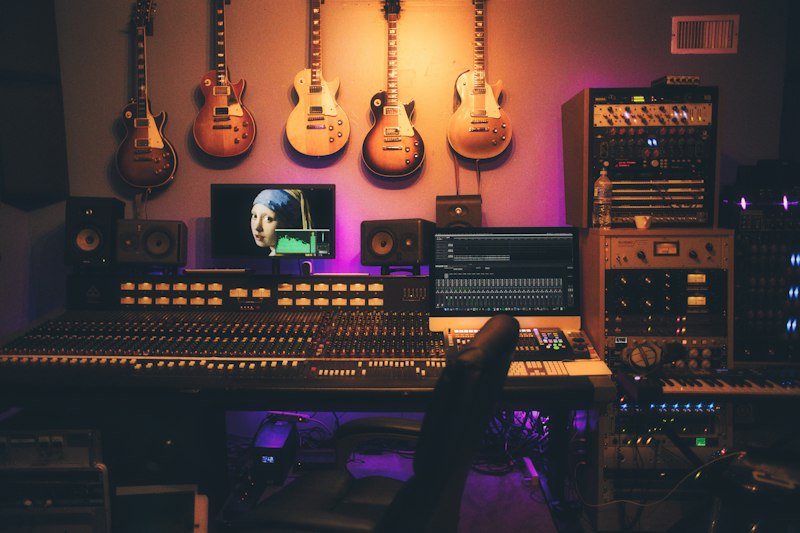
Home Recording Gear List (Minimal to Full Setup)
It helps to think about home recording gear in three tiers: "essential," "nice to have," and "pro-level." Start with the basics, then upgrade as you grow.
Essential Gear (5 Items)
- Computer (PC, Mac, or Chromebook): The foundation everything runs on. Most machines from 2015 onward will work fine. 8GB of RAM or more is recommended.
- Microphone: A USB condenser mic is the easiest starting point. The Audio-Technica AT2020 USB (~$100) is a go-to beginner choice.
- Headphones: You need a pair for monitoring. The Sony MDR-7506 (~$100) and Audio-Technica ATH-M50x (~$150) are both popular. Avoid noise-canceling earbuds — they're not suited for recording.
- DAW (Digital Audio Workstation): The software where you record, edit, and mix. Free options are more than enough to get started (more on this below).
- A quiet recording space: Your room has a bigger impact on sound quality than your gear does. Even a closet works.
Nice-to-Have Gear
- Audio interface: Connects an XLR microphone to your computer and significantly improves audio quality. The Focusrite Scarlett Solo (~$120) is the standard beginner recommendation.
- Mic stand and pop filter: Keeps your mic in place and blocks the harsh bursts of air from plosive sounds like "p" and "b."
- Acoustic foam panels: Stick them to your walls to cut down on room reflections. Budget packs are available on Amazon for around $20–$30.
- Studio monitor speakers: Give you a more accurate picture of your mix than headphones. The Yamaha HS5 is a popular entry-level option.
XLR vs. USB Mic: Which Should a Beginner Choose?
Short answer: go USB if you're just starting out. You skip the audio interface entirely, which saves money and simplifies setup. That said, if you think you'll eventually want to record multiple mics at once or care a lot about audio quality, plan for the switch to an XLR mic and audio interface down the line.
Setting Up Your Recording Space: Room Choice and Acoustic Treatment
It's not an exaggeration to say that your room accounts for roughly 70% of your recorded sound quality. Treating your space will get you further than buying a more expensive microphone.
What Makes a Good Recording Room
- Avoid rooms with hard, bare surfaces (exposed concrete walls are especially problematic — they reflect sound like crazy)
- Rooms with curtains, rugs, sofas, and other soft furnishings naturally absorb sound
- Stay away from rooms facing busy roads or train lines if possible
- Watch out for HVAC and fan noise — turn them off during takes, or plan to use noise removal in post
Low-Budget Acoustic Treatment You Can Do Right Now
- Record in a closet: The clothes act as natural absorbers. Cheapest solution there is.
- Surround yourself with blankets or duvets: Hanging fabric around your mic dramatically cuts reflections.
- Stick acoustic foam panels on the walls: Even inexpensive panels make a real difference. Focus on the corners of the room, where bass builds up.
- Use a bookshelf: A shelf packed with books of different sizes acts as an excellent sound diffuser.
Best Free DAWs for Beginner Home Recording
"You have to use Ableton Live or Pro Tools" — this is a myth. For beginners, the smartest move is to learn the fundamentals with a free DAW first.
1. Browser-Based DAW (No Download Required)
One of the most exciting options for beginners today is the browser DAW — no installation, no setup, works on Chromebooks and low-spec machines. LA Studio, for example, is completely free with no sign-up required, and supports multitrack recording, a MIDI editor, effects processing, AI noise removal, and vocal removal — all in your browser.
2. GarageBand (Mac / iOS — Free)
For Mac users, GarageBand is the obvious first choice. It's intuitive, handles everything from tracking to mixing, and your projects transfer seamlessly to Logic Pro when you're ready to upgrade. It also runs on iPhone, so you can record on the go.
3. Audacity (Windows / Mac / Linux — Free)
A longtime staple of the recording world. Audacity is lightweight, stable, and straightforward — great for basic recording and audio editing. It's not the best for MIDI work, so think of it as a dedicated tool for capturing vocals and acoustic instruments.
4. Cakewalk by BandLab (Windows — Free)
Cakewalk was once a paid, professional DAW (formerly SONAR), and now it's completely free. It's the go-to for Windows users who want a full-featured recording environment from day one. Full VST/VSTi plugin support means you have access to a huge library of instruments and effects.
5. LMMS (Windows / Mac / Linux — Free)
LMMS shines for electronic music and beat-making. It comes with built-in drum machines and synthesizers, making it a great fit for aspiring producers and beatmakers.
How to Record Entirely in Your Browser: No Installation Needed
Low-powered PC? Don't want to deal with software installs? Only have a Chromebook? A browser DAW lets you start recording regardless. Here's how the basic workflow looks:
Step-by-Step: Recording in a Browser DAW
- Open the editor in your browser: Visit the LA Studio Editor in Google Chrome or Edge.
- Allow microphone access: Click "Allow" when the browser asks for microphone permission.
- Add a new audio track: Click the "+" button in the track list to create an audio track.
- Select your input device: Go to the audio settings menu at the top of the editor and choose your microphone.
- Hit record: Click the "●" button in the transport bar to start recording.
- Edit your take: Click on the recorded waveform to trim it, adjust volume, and apply effects like reverb, EQ, and compression.
- Export: Download your finished track as an MP3 or WAV file.
If your recording picked up background noise — an air conditioner humming, for instance — AI noise removal can clean it up with a single click.
7 Tips to Improve Your Home Recording Quality
Once your gear is in place, these recording habits will make a noticeable difference.
1. Get Your Mic Distance Right
For condenser mics, 6 to 12 inches from the source is the standard starting point. Too close and the proximity effect pumps up the low end unnaturally; too far and you're capturing too much room sound.
2. Record at -12 dBFS (Leave Headroom)
Set your input gain so peaks hover around -12 dBFS. Pushing the level too hot causes clipping — distortion that can't be fixed in post. It's always better to record quieter and boost in the mix.
3. Always Use a Pop Filter
Position a pop filter about 4 inches in front of your mic to block the bursts of air that cause plosive distortion on words starting with "p" and "b." They cost next to nothing and make a big difference.
4. Choose the Right Time to Record
Early morning and late at night tend to be quieter — less traffic, fewer neighbors moving around. It's good for your recordings and considerate of the people around you.
5. Record Multiple Takes
Even professional sessions rarely capture a perfect take on the first try. Record at least three passes and either pick the best one or comp together the strongest sections from each.
6. Monitor with Headphones Before You Record
Put your headphones on before hitting record and listen to what's actually coming through the mic. You'll catch room noise and excessive reverb before it ends up in your take.
7. Use AI Noise Removal in Post
Modern AI tools can clean up background noise after the fact. A perfectly silent room is ideal, but it's no longer a hard requirement — post-processing can cover a lot of ground.
Home Recording Budgets: Three Ways to Start
One of the most common questions beginners ask is: "How much do I actually need to spend?" Here's a realistic breakdown at three budget levels.
$0 — Start Right Now
- Gear: Built-in computer mic or smartphone earbuds with inline mic
- DAW: Browser DAW (LA Studio) or GarageBand (Mac)
- Audio quality: Good enough for voice memos, rough demos, and scratch tracks
- Best for: Spoken word, demo recordings, quick song ideas
$100–$300 — Serious Beginner Setup
- USB condenser microphone ($80–$150)
- Monitoring headphones ($40–$100)
- Mic stand and pop filter ($20–$40)
- Audio quality: Solid amateur-level results, more than good enough for online release
$500–$1,000 — Intermediate Setup
- XLR condenser microphone ($200–$400)
- Audio interface ($100–$200)
- Studio monitor speakers ($200–$400)
- Acoustic treatment and mic stand ($100–$200)
- Audio quality: Semi-professional, approaching commercial release quality
Common Beginner Mistakes (and How to Fix Them)
Mistake 1: Noticeable Latency When Monitoring
If there's a delay between what you play and what you hear through your headphones, use your audio interface's direct monitoring feature, or reduce the buffer size in your DAW settings (aim for 128 samples or lower).
Mistake 2: Clipping (Distorted Recording)
Pushing your input gain too high causes the waveform to clip — and clipped audio can't be repaired. Always check your peak levels before recording and leave yourself some headroom.
Mistake 3: Too Much Room Reverb
If your recordings sound like they were made in a bathroom, your room needs more absorption. Blankets, duvets, and closet recording can fix this immediately without spending anything.
Mistake 4: Can't Get Rid of Background Noise
Constant background noise — like an HVAC system or computer fan — is called "steady-state noise," and AI noise removal tools handle it well. Sudden, unpredictable sounds like a dog barking or a car horn are much harder to remove cleanly; for those, re-recording the take is usually the better call.
Conclusion: The Fastest Way to Get Better Is to Start Recording
You don't need a perfect setup to start making home recordings. A single USB mic and a free DAW are enough to begin today. You can improve your gear and skills over time, but recording experience is something you can only build by actually doing it.
Start by capturing a demo with whatever you have, and get a feel for how your voice or instrument sounds on tape. A browser-based DAW removes every barrier to entry — no downloads, no configuration, just open and record. LA Studio is free, requires no sign-up, and supports multitrack recording, AI noise removal, and full effects processing, making it a great place to take your first step.
Frequently Asked Questions
Q. Can I record at home using just my phone?
A. Absolutely. iPhone users can use GarageBand (free), and Android users can use BandLab (free) — both support multitrack recording with a built-in or headset mic. That said, phone recordings have their limits, and you'll want to move to a computer setup if you're planning to take things further.
Q. Can I record without a microphone?
A. If you're recording live instruments or vocals, you'll need a mic. But if you're working with MIDI and software instruments, you don't need one at all. You can program melodies, chords, and drums directly into a piano roll and produce a full track without ever plugging in a microphone.
Q. Do I need a soundproofed room to record at home?
A. No. A proper soundproofed room is nice to have, but it's far from required. Closet recording, hanging blankets around your mic, and sticking foam panels on the walls can get you surprisingly far on a tight budget. And if noise does sneak into your recording, AI noise removal can handle a lot of it after the fact.
Q. Is home recording or studio recording better?
A. It depends on what you're making. For demos, streaming releases, and hobbyist projects, home recording is more than capable of delivering professional-sounding results. For major label releases or recording loud instruments like a full drum kit, a professional studio has real advantages. That said, more and more professional artists are releasing home-recorded material these days.
Q. Where should I start when learning a DAW?
A. Focus on just four things to start: ① creating a track, ② starting and stopping a recording, ③ cutting and joining clips, and ④ adjusting volume and panning. Master those and you can handle any basic recording session. YouTube has tutorials for every major DAW — just search for the name of your DAW plus "beginner tutorial" and you'll find plenty to work with.